
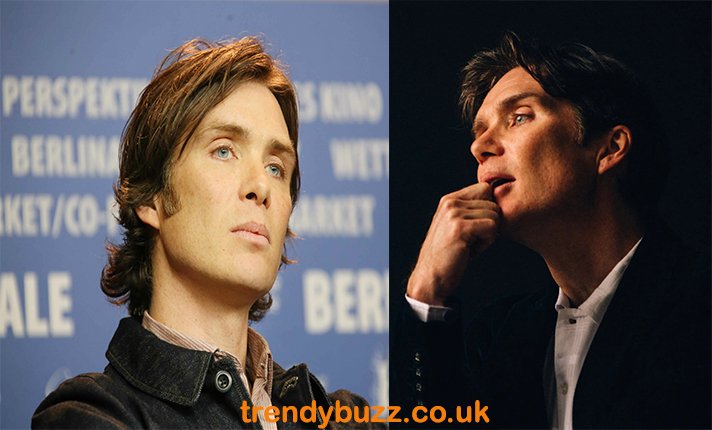
Early life and first steps
Cillian Murphy was born in Douglas, County Cork, in 1976, into a family of teachers. He grew up in a household that valued education and the arts, and he started performing early, first on stage and later in small film projects. His upbringing outside Dublin gave him a grounded sense of self that has guided how he manages public life and career choices.
Stage to screen
Murphy did not begin as a film star but as a stage actor, and that theatrical grounding shows in his work. He made a mark with early appearances that showcased his ability to hold attention with subtlety rather than spectacle. That skill translated well when he moved into film, where he balanced genre work with character pieces in a way that built trust with directors and critics.
He studied at University College Cork where he dabbled in music before deciding to pursue acting full-time. Those early choices kept him rooted in theatre for years, which later informed his disciplined approach to screen work.
Early collaborators praised him for arriving prepared and for bringing a disciplined focus to rehearsals. That preparation made the transition from stage to camera feel natural rather than abrupt.
Breakthrough roles
Audiences first noticed him in high-energy projects like 28 Days Later, but he also took risks in films such as Sunshine and Breakfast on Pluto. On television, his role as Tommy Shelby in Peaky Blinders turned him into a household name and a defining figure of modern TV drama. Critics praised the way he made Shelby feel lived-in, giving the character a private interior life behind the public swagger.
He played a range of parts in both independent and commercial films, moving freely between genres. Those choices established him as an actor who could carry both intimate human stories and the demands of high-concept filmmaking.
The Oppenheimer moment
Murphy’s portrayal of J. Robert Oppenheimer in Christopher Nolan’s biopic brought him widespread awards recognition, including the Academy Award, a BAFTA and a Golden Globe. More than trophies, the role confirmed the through-line of his career: quiet precision meeting large-scale storytelling. The film put Murphy at the center of the conversation about performance and historical responsibility.
Nolan’s filmmaking style — dense, measured, and visually precise — matched well with Murphy’s own priorities as an actor, allowing him to explore the moral and scientific weight of Oppenheimer’s story in a way that resonated with audiences and critics alike.
How he picks projects
Murphy’s choices show a preference for work that challenges him and offers moral or psychological complexity. He moves between independent films and major studio projects, and he often collaborates with directors who focus on mood, detail and ensemble performance. That pattern keeps his career varied and resilient.
Across his career he has shown a willingness to take risks, whether that meant tackling historical drama, psychological thrillers, or character-led indie films.
Recent work and future moves
In recent years Murphy took on producing duties and smaller, intimate roles while still appearing in prestige films. He was involved in Small Things Like These, and news reports have indicated he is connected to a return to the 28 Days Later universe, suggesting he is open to revisiting projects that helped launch him. Those choices show a continued balance between artistic risks and audience-facing projects.
Recent reports about his involvement with franchise projects suggest he is open to mixing the familiar with the unfamiliar, returning to roots while also trying new creative roles behind the camera.
On craft and presence
A frequent remark about Murphy is how expressive he can be with little outward show. Directors often rely on his eyes and cadence to carry emotional truth. That economy of performance means he can anchor a film without dominating it, which is a rare talent in cinema where so much is built around spectacle.
Critics note that his restraint is not lack of emotion but a choice to layer feeling, letting small gestures accumulate until the audience feels their full impact.
Private life and perspective
Murphy married artist Yvonne McGuinness in 2004 and they have two sons. He keeps his personal life intentionally private and rarely courts the spotlight. This discretion feeds into a public persona that feels focused and deliberate: an actor who makes choices for craft rather than for headlines.
His private life is deliberately ordinary compared with the image-driven celebrity culture around him; friends describe him as thoughtful and direct, someone who values time with family over public exposure.
Why he matters
Murphy’s career matters because it models another way of being a contemporary film actor: persistent, selective, and committed to complexity. He demonstrates that long-term respect from peers and critics can come from sustained attention to the roles you choose, rather than constant visibility.
Young actors often cite his trajectory as instructive: take craft seriously, work steadily, and do not conflate visibility with artistic success.
Watching him now
Seen across decades, Murphy’s work rewards patience. He often revisits similar emotional territories but deepens them with each film and series. For viewers who care about acting as a craft, his films provide both technical excellence and genuine human mystery.
Binge-watching his work offers a lesson in the power of nuance: he can transform a silence into narrative propulsion, or give a single look the weight of a scene.
Final note
Cillian Murphy is not the kind of actor who seeks to be the loudest voice in a conversation. Instead he listens, selects, and performs in ways that leave space for the audience to respond. That restraint has become his signature, and it ensures that when he does step into larger light, the effect is quietly seismic.
